
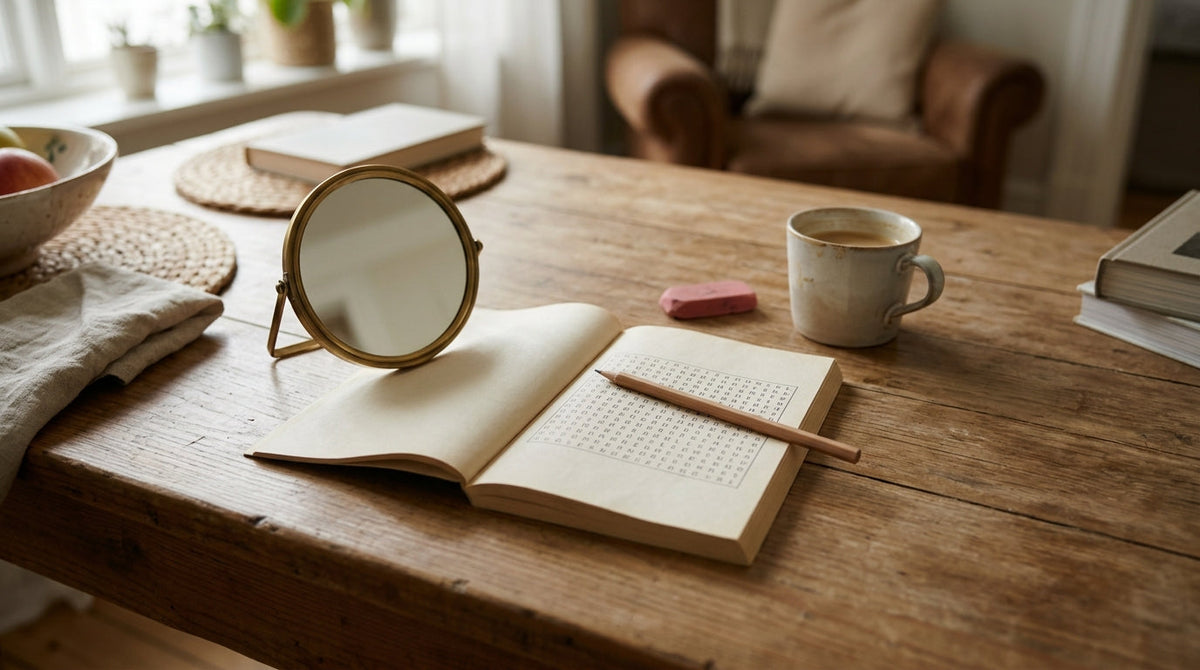
Every word search puzzle hides its words in two fundamental directions: forward and backward. Understanding this simple fact changes how you approach any grid.
Forward placement
Forward words read the way you expect — left to right across a row, top to bottom down a column, or diagonally from upper-left to lower-right. Your brain is wired to recognise these patterns because you have been reading this way your entire life. Forward-placed words are the easiest to spot, and most beginner puzzles rely on them heavily.
Backward placement
Backward words are the mirror image. They read right to left, bottom to top, or diagonally from lower-right to upper-left. These are harder because your eye has to work against its natural reading direction. The word OCEAN becomes NAECO — and unless you deliberately train yourself to read in reverse, it hides in plain sight.
How the two interact
In a well-constructed puzzle, forward and backward words share letters at their intersections. The letter A in APPLE (forward, across) might also serve as the A in STAR (backward, down). These shared letters are anchor points. Once you find one word, its letters become clues for words running through it in the opposite direction.
Constructors use this interplay to control difficulty. A puzzle with only forward words feels approachable. Add backward words and the same grid becomes significantly more challenging — not because the words are harder, but because your scanning strategy has to cover twice as many orientations.
A practical approach
When you open a new puzzle, do a quick forward pass first. Sweep each row left to right and each column top to bottom. Mark what you find. Then switch to backward mode — reverse your scanning direction across the same rows and columns. Finally, tackle the diagonals, checking both directions.
This two-pass method is faster than trying to look in all directions at once. Your eyes settle into a rhythm, and the words surface more quickly than if you were scanning randomly. Try it on any book from the collection and notice the difference.